It’s Only Terror If It’s Unknown


The oldest and strongest emotion of mankind is fear, and the oldest and strongest kind of fear is fear of the unknown.

H.P. Lovecraft, Supernatural Horror in Literature

It didn’t take long after the news broke about a militia taking over a government compound for my Facebook Newsfeed to light up with people calling BS on the stark differences in how this situation is being covered (or not covered) by media. 

Here are some things to think about:

This group is being described as a militia. They believe they are doing the work of God and have taken over a government area. 

When groups of middle eastern descent are described as the one above, we call them “radicalized extremists.” 

But this militia is not of Middle Eastern descent. They’re white farmers. They’re Christians. They remind us of our crazy Uncle So And So. They are familiar and, therefore, are a militia.

We, as a society, are geared toward white men (Don’t even try to deny it. Theirs is the default perspective of western history, religion, politics for the last 500 years. We can’t change it til we own it). Because we think we know white guys so well, a militia in Oregon doesn’t seem so scary. 

Farmers with rifles talking about patriotism and freedom. Yeah, we know those guys.

But here’s the thing to remember: in Saudia Arabia, Osama bin Ladin was once someone’s crazy uncle. 

Radicalized extremists are the same the world ’round. But these guys are our radicalized extremists. We know what to expect, so it’s no big deal.

But here’s the problem for all of us who are still relatively offended by the term “white privilege;” when we don’t respond to the white guys with guns the same way we would respond to minorities with guns, we’re displaying our privilege for the world to see.

This isn’t a topic I normally write about, but race relations have become the topic of conversation in our culture the last couple of years. I was once one of those idealistic “progressives” who believed wholeheartedly that we were a post-racist culture. One of those “I have black friends and my sister is black!” sort of defenders of white openmindedness. The continued popularity of Donald Trump’s hate-fueled campaign confirms that we are not post-racism at all.

And so the question remains, “What should we do?” I believe the answer lies in how you identify we

We as believers must acknowledge the role that fear of the unknown plays in our prejudices and convictions. Whether that unknown is another race, culture, or religion, simply admitting we don’t know is genuinely the first step to learning about others. It’s tough to learn about black America when you still steadfastly hold to the line “There’s only one America!” To say that is to deny the rich heritage of those who have come together to make America.

This country was never about eradicating other cultures for the sake of a new one. This country was founded on the exact opposite premise; that people should be able to bring their beliefs and their dreams with them in order to live them out freely. Those who say coming to America means converting to Christianity and speaking only English have missed the beauty of the Grand Experiement. 

So this event brings me back to a belief I’ve firmly held for years; the way to combat fear is to know. If you’re fearful of Muslims, get to know a few. If you struggle with showing compassion to the LGBT community, be vulnerable and ask a gay co-worker if you could ask them some questions. If you are afraid of the gun toting religious “patriots” currently committing treason in Oregon, peruse some Facebook pages and read up on what they stand for.

Demonstrate empathy. Give people the benefit of the doubt. And be consistent. Not all black protestors are thugs and not all thugs are black protestors. Not all Muslims are radicalized extremists and not all radicalized extremists are Muslims. Do a little less stereotyping and take the time to get to know people and their stories on an individual basis.

How do we loosen the grip that fear currently holds on our nation? Simply put, know and be known. 
The Circle of Life


There is a time for everything, and a season for every activity under heaven:
A time to be born and a time to die, a time to plant and a time to uproot,
A time to kill and a time to heal, a time to tear down and a time to build,
A time to weep and a time to laugh, a time to mourn and a time to dance…
Ecclesiastes 3:1-4
There is a time for all things. Sometimes, those times just occur simultaneously. It’s been a season of multiple “times” in my life recently. I’ve had times to do all of the things listed above; I feel like the last year has included every activity under heaven. Illness and death, graduation, painful separations from people and places that I love, relocation, new risks, leaving old dreams behind and realizing new ones. And then there is that rare moment when a dream you thought was dead is plopped down in your lap again. Literally.
When I left Chattanooga in July, I thought that I was leaving behind my dream of fostering and adopting. After more than two years of training and several possible placements that went to other homes, I moved to Louisville, terrified at the change to come, but perfectly content being the single girl in a new city. I moved in stages over the next couple of months, slowly bringing what I needed as I needed it.
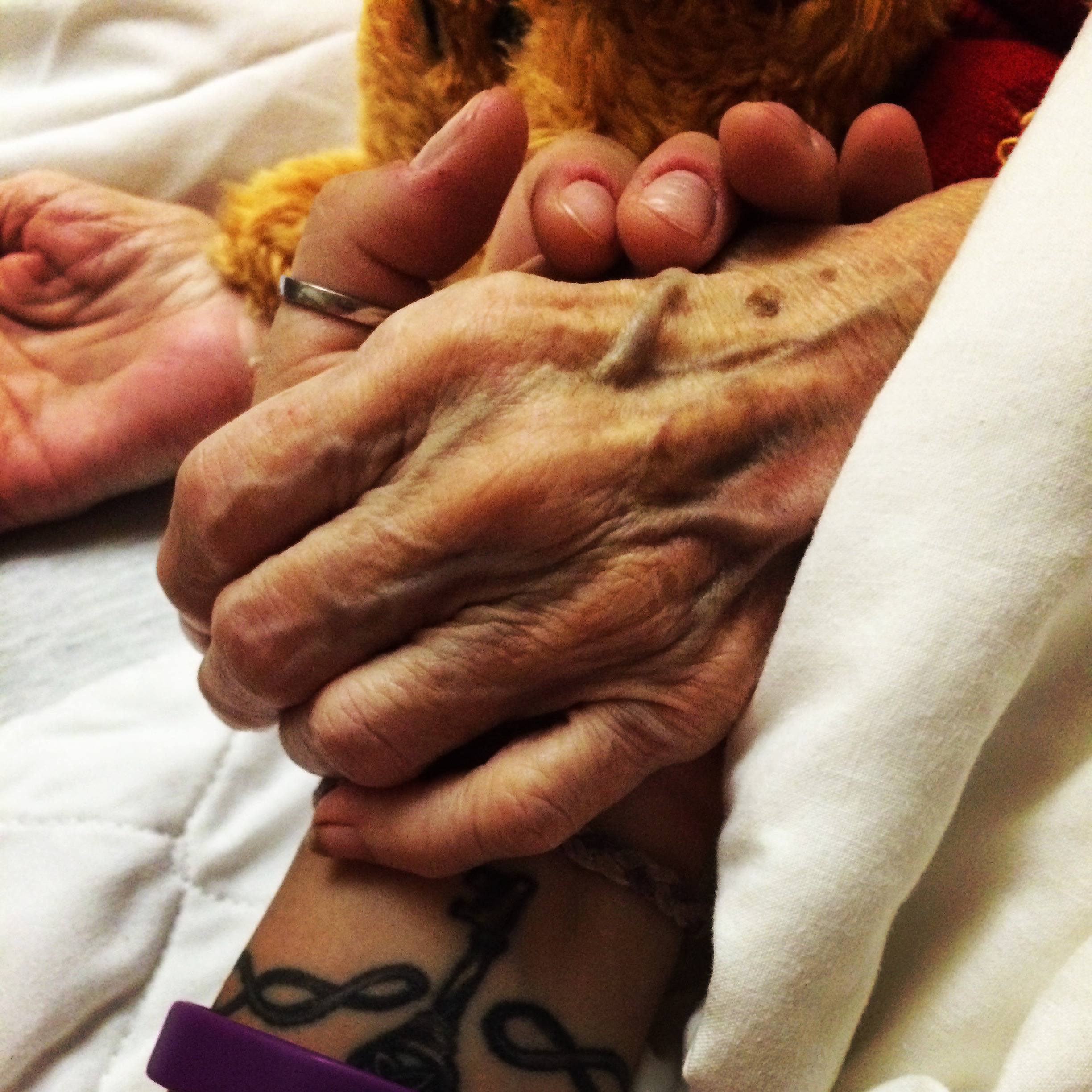
In April, I had moved into my grandmother’s house, planning to remodel it and live in it with my future kids and my two dogs. I ended up there for about 10 weeks with three dogs and no kids. But this crazy time of crazy times began last November, when my grandmother unexpectedly passed away. I had the honor of spending her last days with her, and on the day before she died, I snapped this photo:
2014-11-24 18.36.42-1When we moved my grandmother to the Hospice unit, we realized she was most comfortable on her side, but she needed a pillow to prop up her arm. My back seat is always full of stuffed animals, so Pooh ended up being the pillow my Nana hugged. I love this picture. It’s a reminder of the love and support I know I always had from all of my grandparents. She is the one stepping into eternity, but it looks like she’s holding me up. It now hangs over my desk at home as a sweet reminder that no matter where I may go, I have a support system that is always holding me up.
My grandmother’s death allowed me to have a space, a home for new life, and when I moved out of her house, I thought that dream had ended, or at least been delayed indefinitely. The last few months, though, life and death have been intricately intertwined, a precious reminder that there are different times in life, and sometimes they really do happen all at once.
Life and death and love and eternity.
Hope.
All powerful words, all captured for me in the image above.
Which is why, when I woke up last Sunday after dozing off while putting Big Sister down for a nap, seeing this took my breath and brought tears to my eyes:
2015-10-24 21.32.23There’s someone else, cuddling Pooh with one hand, and hanging on to me with the other.
One moment is a sweet reminder of memories made and a life well lived, a legacy to uphold.
The other moment is a precious promise, a new and unexpected life to cherish and protect, a generation to whom that legacy will be passed.
The last month has been a whirlwind of preparing my grandmother’s house to be sold to a different young family. Several weekends I have gone back to Chattanooga and have simultaneously closed a chapter with my grandmother and begun writing a new chapter with my own kids. These intertwined times were literally being separated into different boxes, what was being preserved, what will be moving to Kentucky. But the best moments were when those old memories were packed up to come to Louisville for Big Sister and Little Man. Books and toys and highchairs that have been used and loved by generations of kids in my family are being used again. And my Nana would be thrilled to see that.
My worldview recognizes that life is a line; there is a beginning and an end to time itself, and it’s not stopping for anyone. But even while time marches on, the seasons and rhythms of life remain. There are circles and connections, and sometimes the time to laugh and the time to cry may just happen at the same time. Just like spring comes after winter, new life is born out of death, and occasionally, we get to be there to see both the end and the beginning. And both are good.
And by the way, that Pooh has officially been designated a family heirloom.

Social Media Tattoos


This is a post I originally published in 2011 for Christians in Social Media, but unlike most things in the social media world, it is still very relevant today.

Yesterday, author and speaker Jonathan Acuff posted a comment on his Facebook fan page that could lead to very beneficial discussion between teens and those who live and work with them.

“Posting a photo online is like getting a digital tattoo. Once it’s on, it’s on forever. You wouldn’t let your 12 year old get a tattoo. Make sure they understand what they’re doing when they post a photo online.”

As Christians who actively participate in social media, it is important that we teach our teens (and first learn ourselves) the importance of applying biblical truth even in our interactions on social media sites.

The fact that our every move is known and “recorded” by God is an ancient truth; in Psalm 139 David praises God that we can never escape His all-loving, watchful eye. But being “watched and recorded” 24/7 by other people is new to human culture, and it places upon believers a new pressure to be wise in our walks, even at our most relaxed times like social gatherings. Here are some tips on caring for your “digital testimony”.

1. Be proactive. Don’t wait until you see that one of your students is tagged in a picture that captured a moment of poor judgment. Begin talking now with your tweens and teens about the permanence of anything posted online, not just photos. Even if you “delete” a comment from a social media site, it is captured and saved somewhere. Talk with them about where they go and who they hang out with. Ask them if they have talked with their friends about boundaries concerning what is ok and what’s not ok to post online. Remind your students that personal information such as address, phone number, and age should never be shared with people online that they don’t also know in person. And as much as possible, get to know your child’s friends, both those in reality and those with whom they only associate online.

2. Be gracious. Even the most well meaning person can end up in a photo or post a comment without thinking, and when (not if) you or your child gets caught in a moment of thoughtless social media usage, don’t panic and don’t blow up about it, even if that is your first impulse. If it is something you or your child posted and you have “social media regret”, delete it. While it doesn’t change the fact that it took place, repentance for a wrong decision includes attempts to make it right, and removing the questionable post shows an admittance that it was wrong and a willingness to correct the situation. If a friend has posted something of questionable or unflattering content, go the extra mile to make personal contact as soon as possible (a phone call, a face-to-face conversation), asking them to remove the photo or comment. Making personal contact lets them know that you are both sincere and serious in your request.

3. Be accountable. The best way to prevent photos or comments of questionable content from becoming social media tattoos is to avoid questionable situations to begin with. Teach your teens (and practice yourself) accountability with a friend in social settings. A good rule of thumb these days for where to be and who to hang out with is to ask yourself, “Would I want my friends and family members to see this posted on online?” If the answer is no, then it’s time to excuse yourself from the situation.

These are just a few ways to protect our testimonies online from negative impact.

What are some ways we can share a positive testimony online?

Remembering to #NeverForget


Only be careful, and watch yourselves closely so that you do not forget the things your eyes have seen or let them slip from your heart as long as you live. Teach them to your children and to their children after them. Deuteronomy 4:9

In the English Standard Version of the Bible, the word “remember” is used 162 times. The phrase “do not forget,” 15 times. Paul may encourage us to forget what is behind and press on toward what is ahead (Phil 3:13-14), but God is adamant that we also take the time to look back and remember. To think on the past, to recount His faithfulness. But also, I think, to ensure that we never forget the feelings and consequences, both positive and negative, that we encounter in life.

Why is God so insistent that we not forget?

Why do we so easily forget?

Some things, though, we want to forget. The feeling of traumatic events. The scars on our hearts, minds, and bodies that come with tragedy. The sights, sounds, and smells that remind us of the worst moments of our lives. Sometimes we are able to on most days; to move on with life, to see beyond the tragedy, to find a new normal.

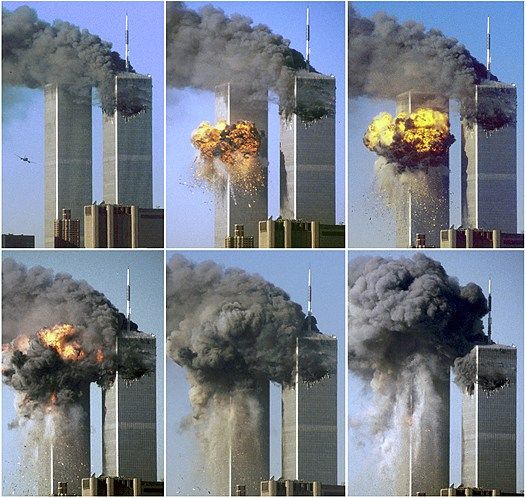
I would dare say that most Americans have done just that in relation to 9/11. It is a part of us, but the impact of that day is now such a part of our daily lives that it is no longer in the forefront of our minds. The War on Terror is just the backdrop to our lives. It so defines our society that we hardly notice it; until it is thrust back in our faces.

This summer, it was thrust back into the face of my hometown. When I first heard about the attacks in Chattanooga in July, there were conflicting reports as to what was going on, and the worst scenario I heard was that recruitment centers in the South were on high alert due to “coordinated attacks.” My first thought was, “Not again.” I had forgotten, and that day forced me to remember.

#NeverForget has become a catchphrase in our society. Its use has mostly become satirical and sarcastic, a caricature of our society’s absurd reaction to non-events:

While the phrase is a humorous way to point out the absurdity of the things we deem tragedies, it is also a phrase that should remain on our lips about the things that really matter.

Today I saw firsthand why God tells His people so often to never forget and to always tell the story, whichever story that may be. I walked into a 6th grade classroom this afternoon as the teacher was telling his students that they had enough time to watch the “9/11 video” that he had told them about earlier in the class period. It’s been a while since I’ve seen the actual news footage of that day, and this video was a compilation of live news coverage at 9:03 am, when the second tower was hit.

My reaction to hearing and seeing it all again was unexpectedly physical. It took my breath. A cold chill swept over me with such power that my skin hurt from the goosebumps. I had to sit down.

But as I gathered myself, I looked at the students whose eyes were transfixed on the screen. They were silent, watching, soaking it in.

And it hit me.

This was probably the first time many were seeing this footage.

None of them were even alive on September 11, 2001, and until the last year or so, they weren’t really old enough to grasp the impact of the day. Maybe they had seen pictures or had talked about it in class each year, but 9/11 was just a date to them, a distant memory like the assassination of JFK is to me or the attack on Pearl Harbor is to my parents.

It was a 14 year old distant memory. That’s how quickly our collective memory can forget.

It had been just a story to them, but today it was real. It was real for them for the first time, and it was real for me again. Suddenly I was once again a terrified college student, away from home for the first time and acutely aware of being far from my family and close to Oak Ridge, TN, a nuclear facility that is a known high alert potential target. I was staring at cloudless and silent skies as flights were grounded for days. I was helpless because I couldn’t leave school to go to New York, and I couldn’t even donate blood because there were no survivors who needed it. I was desperate for connection with others.

I remember 9/11, but I had also forgotten 9/11. And our students had never known for themselves. I needed to be reminded, and they need to know.

THIS is why God tells us not only to remember but to also tell our children. If we don’t tell them, we forget. We forget His goodness. We forget the consequences of our bad choices. We forget the blessings of our obedience. We move on with life.

We forget. And they never know.

So how do we never forget? We teach. We tell. We remember, in community.

In order to remember, we must never forget, and to never forget, we must always remember.

Love the Sojourner

Love the Sojourner


“Love the sojourner, therefore, for you were sojourners in the land of Egypt.” Deuteronomy 10:19 (ESV) 

In biblical times, hospitality was expected and homes were open to travelers. Inns were few and far between, and often dangerous places to stay. I’ve wondered on occasion what this hospitality command would look like in my Bible Belt culture where we have as many hotels as we have churches.
The past two weeks, I’ve not only seen this love, I have experienced it.

When I accepted my new position at a school in Louisville, I knew personally one couple here; Kevin and Patricia Smith, two of my parent’s best friends in ministry and in life. And they took it upon themselves to make sure this sojourner was well loved.

They weren’t ok with me staying in a hotel until I found an apartment, so they asked a friend from church if I could stay with her. She said yes without ever even speaking to me. The plan was to take it a week at a time, and stay with her until I found an apartment and could move in.

When I arrived at her house yesterday, she told me that it would be crazy for me to pay a mortgage and apartment rent when she has this house, so if I could handle her, I was welcome to stay with her until my house sells in Chattanooga. 

We chatted all evening about foster care and teaching. Mrs. Pat dropped by to check on me and make sure I was settled in. Then she took me to get buttermilk pie for dessert and drive me around the area.

This morning, Pamela, my host, made enough coffee for both of us and helped me figure out how long it would take to get to school because of last night’s flooding and regular traffic issues.

Then, as I was walking out the door, she said, “You know, I don’t even know your last name. What is it?”

That is loving a sojourner. Not needing the details, but just knowing the need and meeting it.

As my sister said last week, “People are strangers. Until they are not.”

And in the unity of the Spirit, we may be sojourners, but we are never truly strangers.